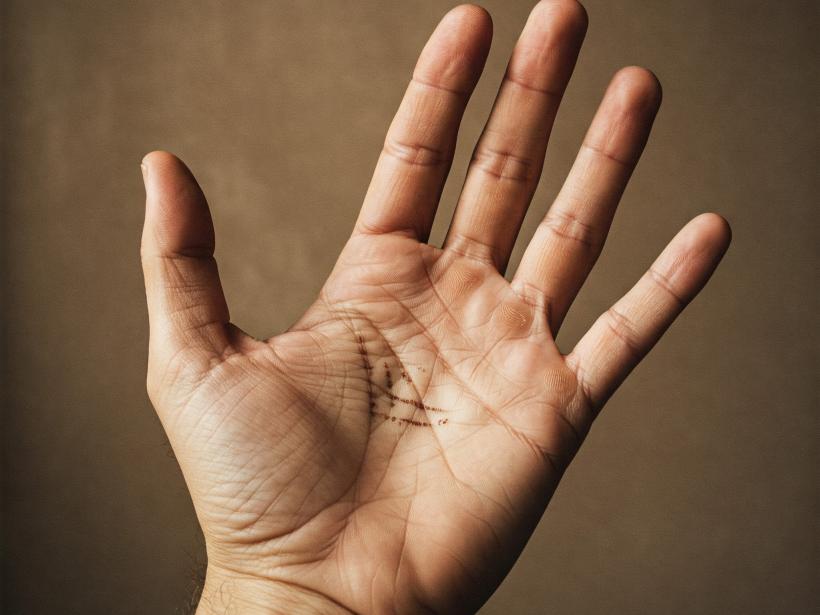

Palmistry reads the hand as a whole: the shape, the texture, the mounts at the base of the fingers, and only then the lines. Beginners usually start with the lines and stop there, which is why so much of what circulates online reads like a fortune cookie.
Which hand
The common convention is that the non-dominant hand shows what you were given and the dominant hand shows what you have done with it. Most palmists look at both and read the differences between them, so if someone glances at one hand and pronounces, you are watching a performance rather than a reading.
The four major lines
- Heart line. The uppermost of the long horizontal lines, running below the fingers. Read for emotional style and attachment.
- Head line. Below it, crossing the palm. Read for how you think and make decisions, with its depth and length carrying more weight than its shape.
- Life line. The curve around the base of the thumb. It does not measure lifespan, whatever the films suggest; palmists read it for vitality and for major changes of circumstance.
- Fate line. The vertical line rising toward the middle finger, absent in many hands. Read for career direction and, when it is missing, for a life shaped by choice rather than circumstance.
Mounts and hand shape
The mounts are the padded areas at the base of each finger and around the thumb, each traditionally linked to a planet: Jupiter under the index finger for ambition, Saturn under the middle for discipline, Apollo under the ring finger for expression, Mercury under the little finger for communication. A raised, firm mount is read as emphasis.
Hand shape gets classified by element. Square palm with short fingers is called earth, square palm with long fingers air, long palm with short fingers fire, long palm with long fingers water. Palmists use it as the frame before they look at anything else.
What a session is like
Palm reading is one of the few readings that really does work better in person, since the reader needs light, angle and touch. Sessions run 20 to 45 minutes and typically cost $40 to $120. Some readers photograph the hands with permission and send notes afterwards, which is worth asking about since a palm reading is hard to remember accurately.
Two things to be clear about
No line on your hand gives a death date, and no reader should offer one. Lines do change slowly over years, which most palmists treat as the interesting part of the practice rather than a problem for it.
If you want to see who reads hands near you, our palm reader listings are organised by city with contacts and client reviews. Readers who work with hands often also read tarot, so it is worth checking what else is on offer before you book.